Build a multi-switch useless box with a single moving arm, custom PCB, and 3D-printed mounting — full Arduino code and STL files included.
blog.hirnschall.net


Let's build a 3D printed rubber band gun that has multiple shots, is easy to print, and even more fun to use!
I don't think we have to explain the motivation behind this project any further so let's get started with the design requirements/what we want to have in the finished design.
You can find the model at Printables!
To make this project actually stand out I want the following things to be included in the design:
While the list is not that long, each part is quite important. So, let's dive into the details!
Now that the design constraints have been set, we can go through the details and how we can achieve them. To do so, we will go over the key points in the design with pictures.
In general, a rubber band gun always works in the same way. We stretch a rubber band from the end of the barrel to some sort of lever that is held in place. Once we pull the trigger, that lever is set free to rotate/swing away and release the rubber band. You can see this in fig. 1 below:

To make the gun semi automatic, we can use a rotating drum mechanism. If we use not one lever but multiple levers fixed to a wheel, we can rotate the wheel a fraction of a turn to release just one rubber band.
To make this work, we need a trigger to do two important things. It needs to release the drum and at the same time it needs to prevent full rotation. I.e. it has to allow the drum to rotate a 1/6th of a turn with each trigger pull. When we release the trigger this stop must also be released so that we can shoot the next stop. This part is called disconnector. The part that actually holds and releases the drum when the trigger is pulled is called sear.
Fig. 2 shows the assembly of the trigger mechanism. The trigger itself is connected to the sear with a connecting rod. The sear rotates around an m2 pin when the trigger is pulled. At the same time the back of the sear catches the next tooth of the drum, preventing full rotation. This way each trigger pull releases just one rubber band.
We use an additional rubber band to tension the trigger. The grip has protrusions that prevent the trigger from traveling too far.

We have to make sure that every part is only experiencing load perpendicular to layer lines. Otherwise we risk the part breaking which could be dangerous. Besides the barrel, the drum is the only part that is experiencing any meaningful load. We will therefore print it laying flat. However, the axle sticks out both sides to center the drum. We will split the drum into two parts and glue them together in the assembly process. You can see how this works in fig. 3 below:


The printed and assembled drum is shown in fig. 4 below:

We can now finally assemble the project! The 3D printed files are available on Printables.
In addition to the printed parts, you will need the following hardware:
We can print all parts from PLA as it is easy to print and heat or long UV exposure is not a concern for this project. The parts are designed to print easily and mostly without support. Only the sear has a small overhang that requires support. We will use 0.2mm layer height and the default slicer settings.
As mentioned, the drum is printed as two separate pieces to avoid support material while still printing in the correct orientation for strength. We will use super glue to assemble the drum as shown in fig. 4. Make sure to let the glue cure fully before using the drum in the gun.
Overall I am super happy with how this project turned out. It was originally designed as a gift for one of my best friends.
The mechanism works really nicely and is complicated, yet simple enough to be interesting for non technical people as well.
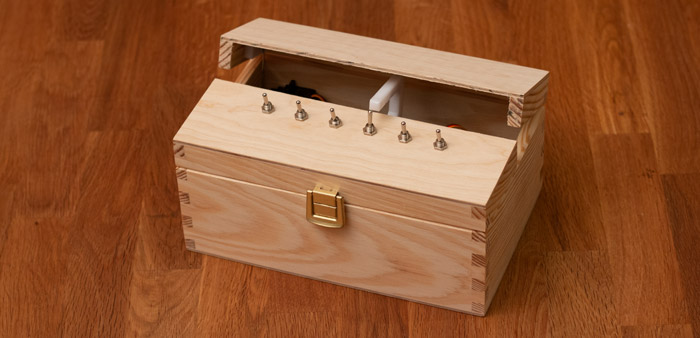
Build a multi-switch useless box with a single moving arm, custom PCB, and 3D-printed mounting — full Arduino code and STL files included.
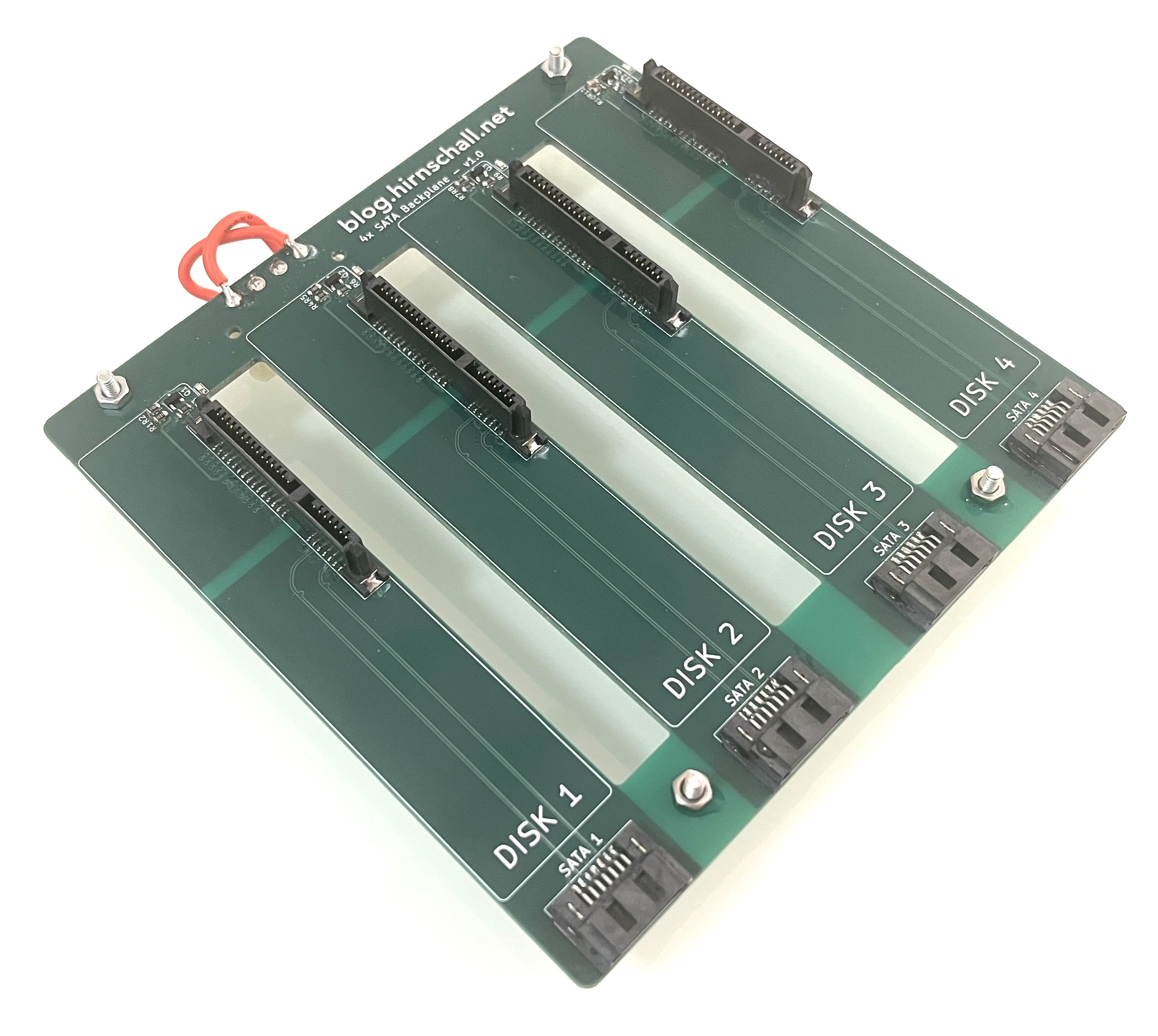
Impedance matching, differential pairs, crosstalk, S-parameter analysis, full wave 3D FEM simulation, and much more.

This project (with exceptions) is published under the CC Attribution-ShareAlike 4.0 International License.
